
Choosing & Laying Out the Stabilized Scales
The handles come from the same Arizona Rosewood tree as the live-edge dining table and bench, stabilized so they'll hold up to a lifetime of hands, weather and work.
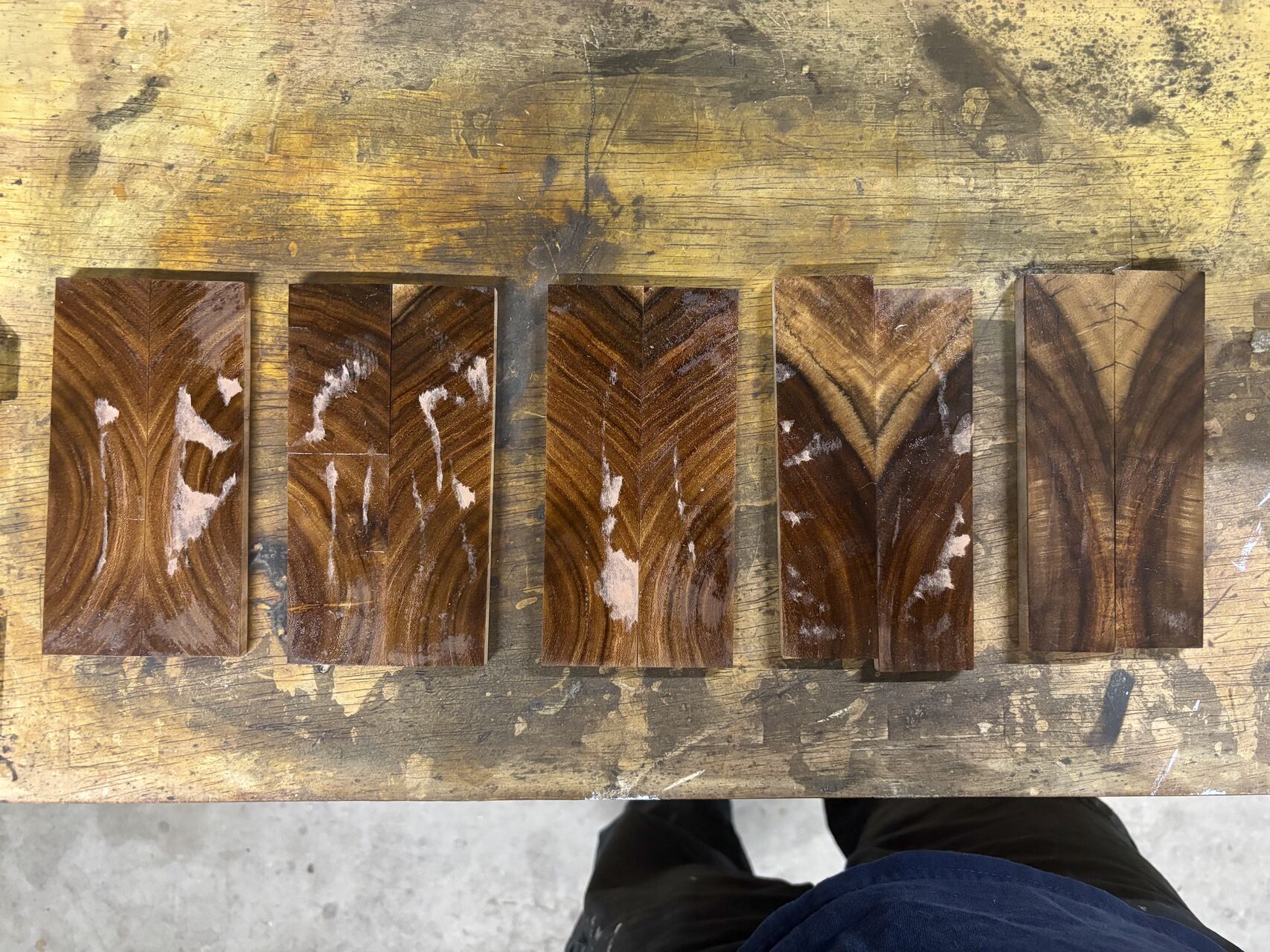
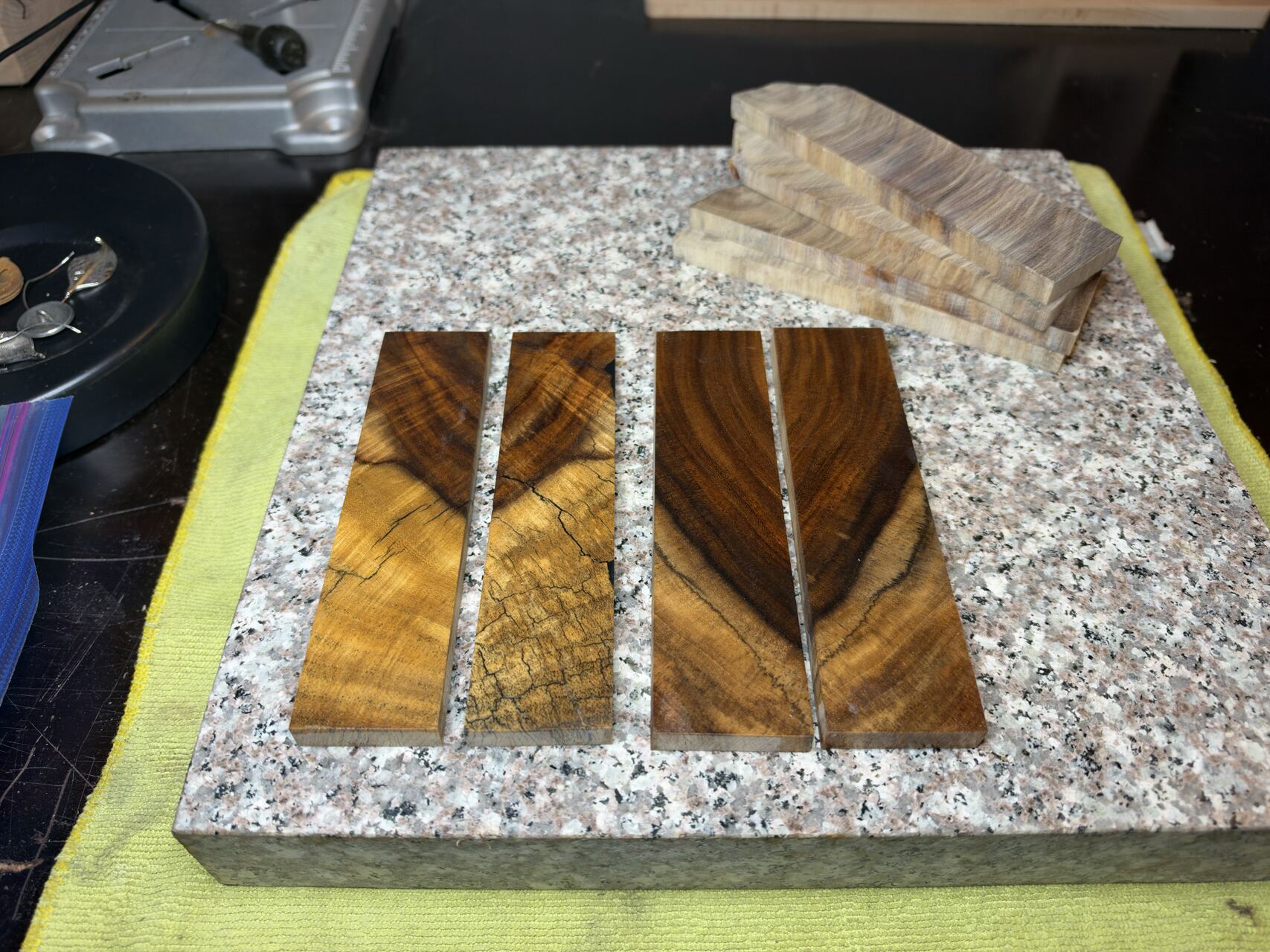
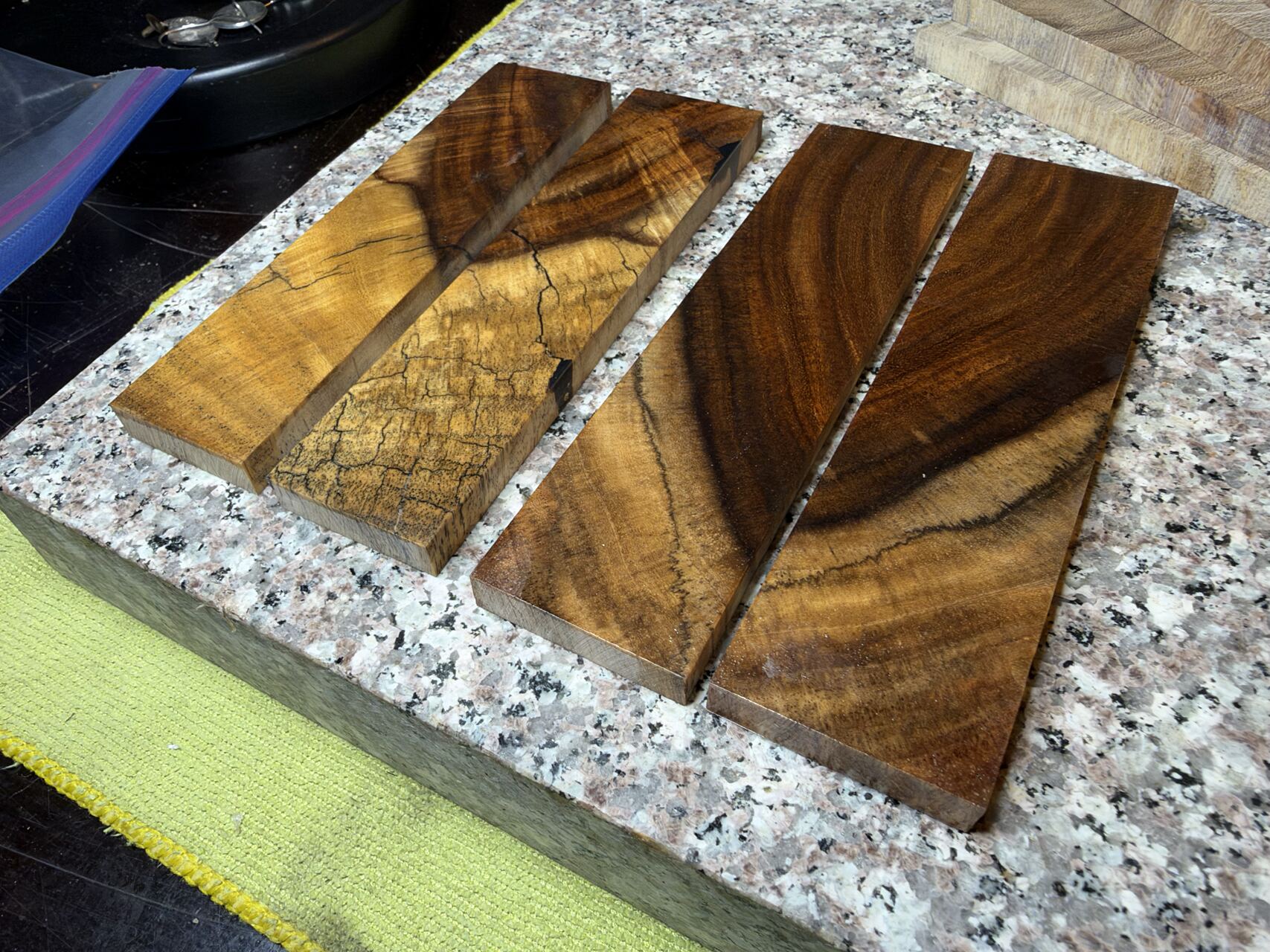
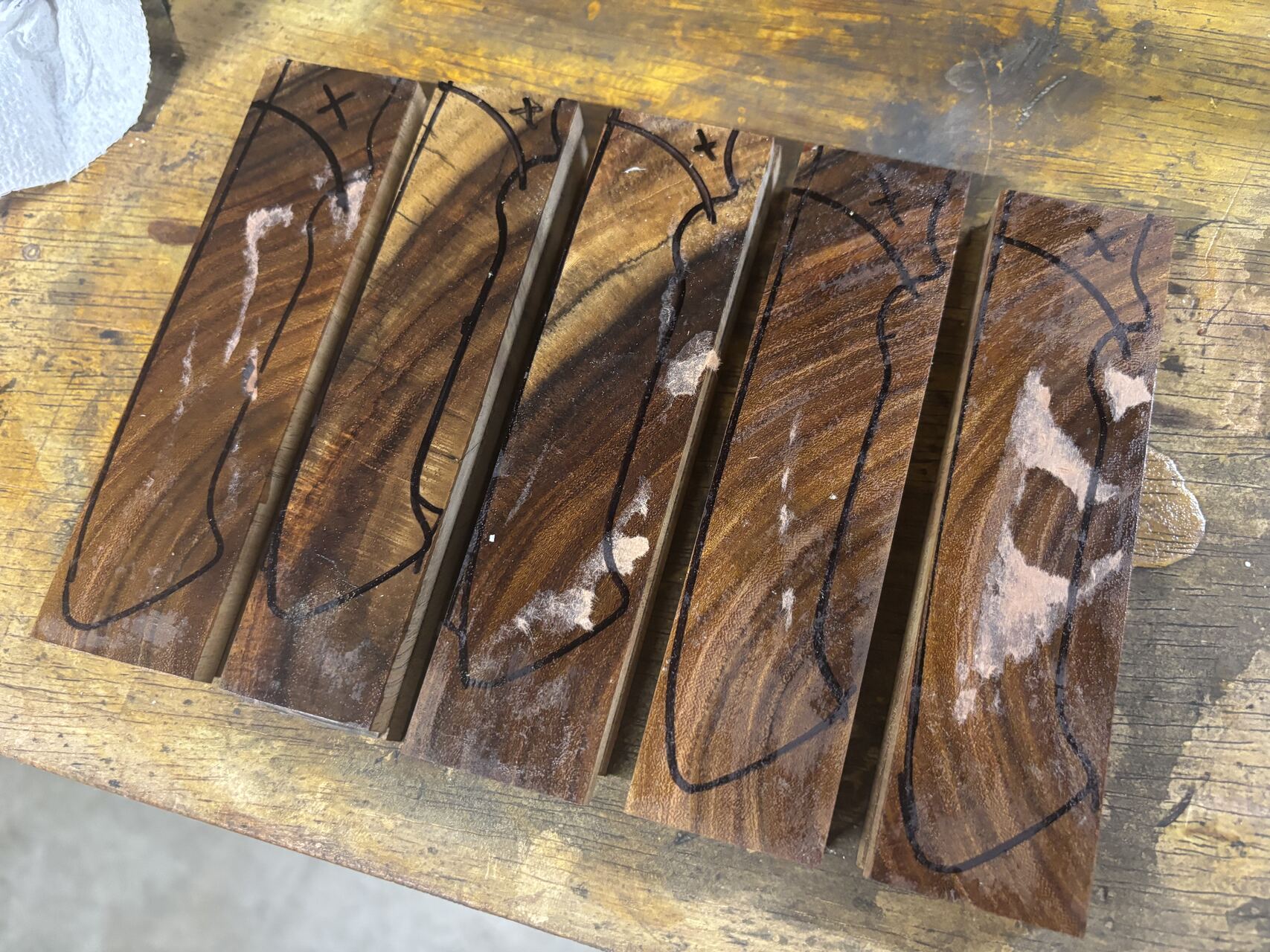
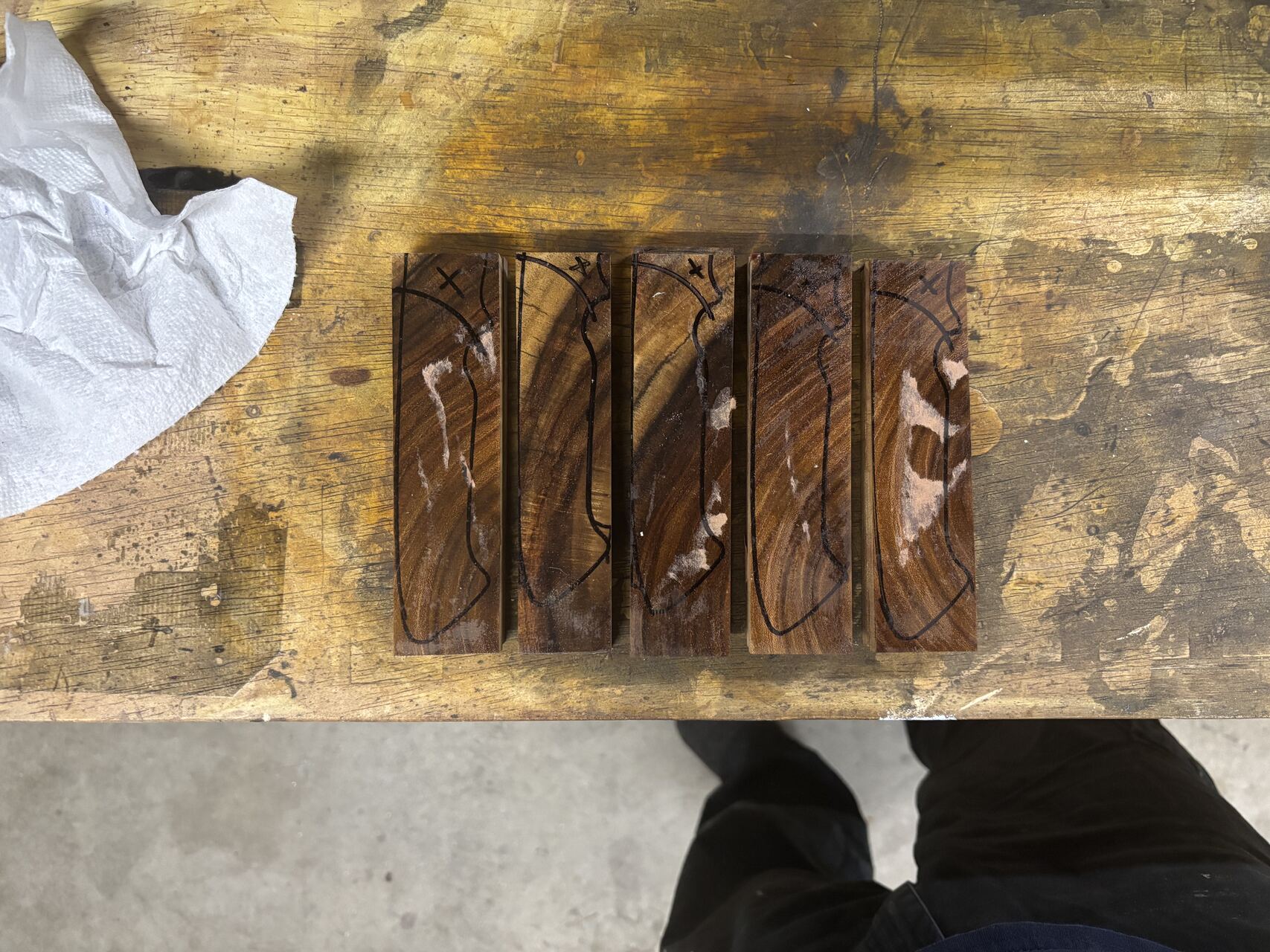
Picking and laying out the scales
Each knife gets two scales, one per side of the tang, cut as matched pairs so the grain mirrors across the handle. I laid the tang on each pair and traced the outline in marker, leaving extra all around for shaping. Mark every pair and its top and bottom now. You'll be glad you did (see Step 6).
The wood was stabilized with Cactus Juice in a vacuum chamber before any of this. Stabilizing gets its own full tutorial soon. For now, here's why it matters.
Why stabilize?
Stabilizing pulls a liquid resin (I used Cactus Juice) deep into the wood under vacuum, then heat-cures it, so the wood's pores are filled with hardened resin.
| Raw wood | Stabilized wood | |
|---|---|---|
| Moisture | Swells and shrinks with humidity, sweat and washing | Takes on very little water, so it stays put |
| Movement & cracks | Can check, crack or shift against the steel over the years | Much more stable, though a cross-grain crack can still fail |
| Cutting & sanding | Normal; open pores can tear out | Sands like a hard, dense hardwood and leaves a crisper edge |
| Finish | Needs a finish to protect it | Already sealed; many makers just sand high, buff and wax. I added shellac for extra grain pop (see Step 12) |
| Look | The natural look | Same grain, often a little deeper and glassier |
⚠ Heads up: Stabilized wood works differently
It's harder and denser than the raw wood, it dulls sandpaper faster, and its dust is part resin, so wear a respirator. Dense, oily woods take up less resin than open-grained ones.
Fix: stabilize dry wood and give it a long vacuum soak, and expect to go through more sandpaper than you're used to.
🛠 Tips
- Trace the outline with room to spare. You can always take more off.
- Match the pairs so the grain mirrors across the handle.
- Mark each pair (knife number, left/right, top/bottom) before anything gets cut.