
Casing & Dragon-Scale Tooling
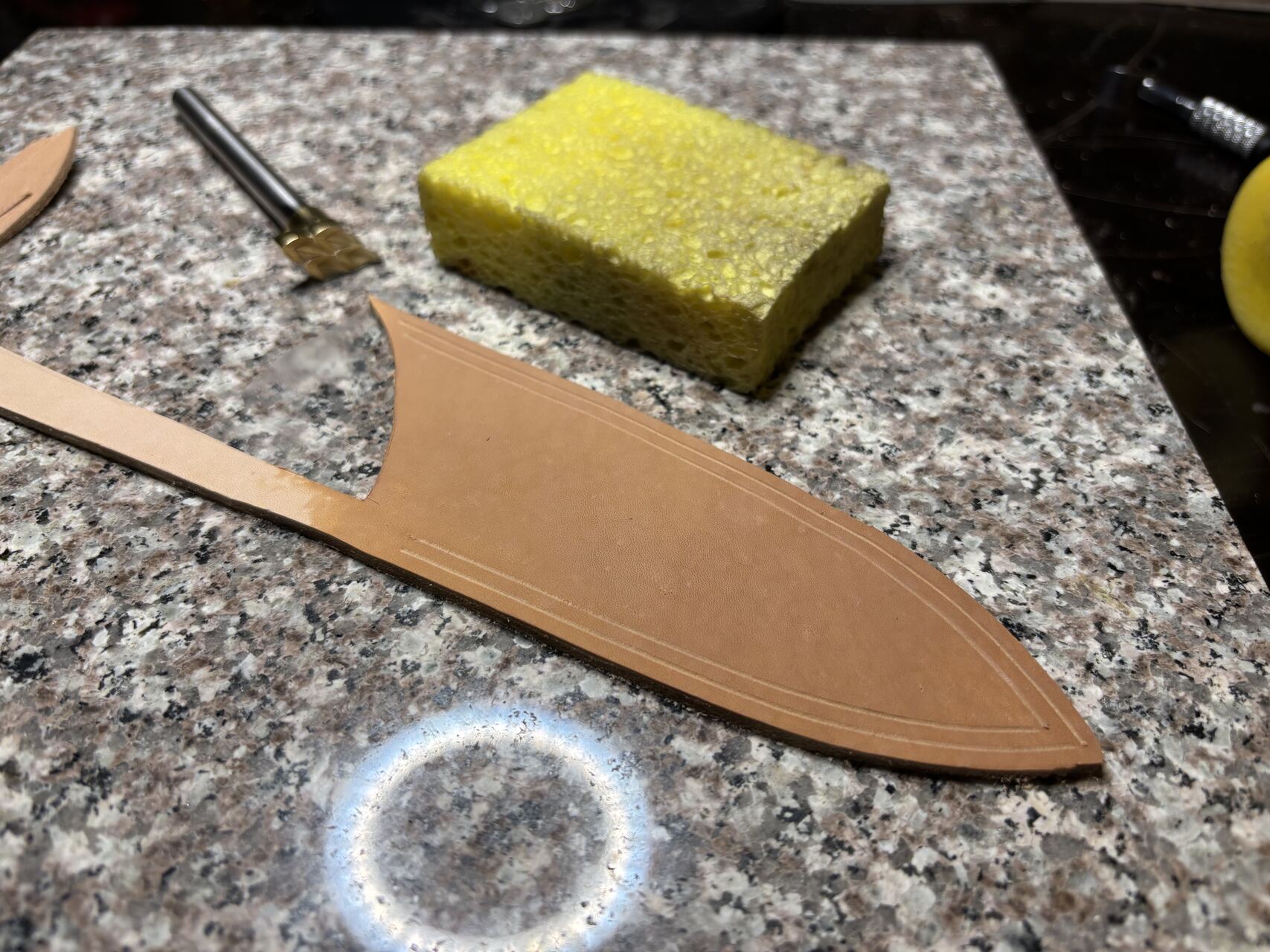
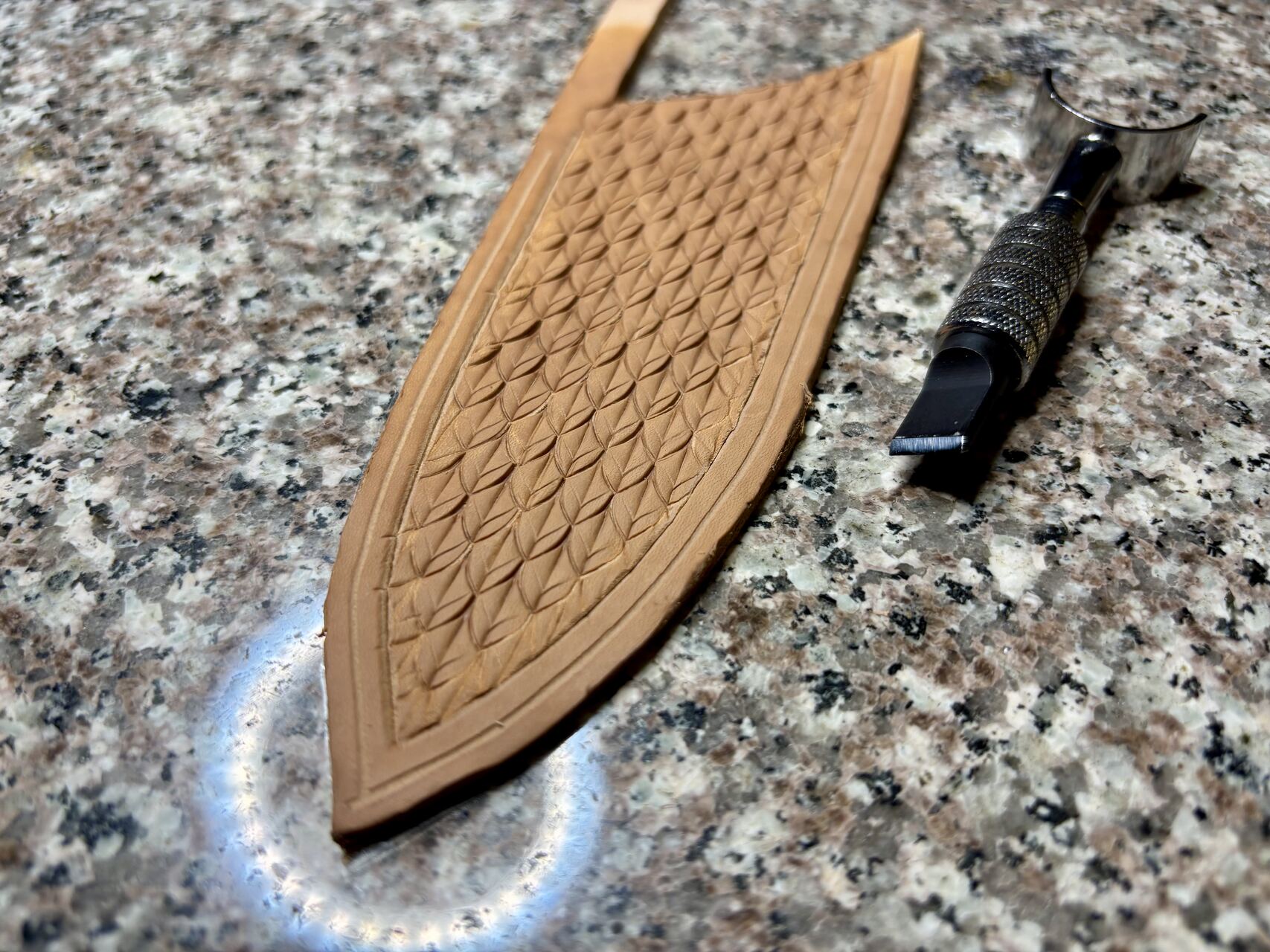
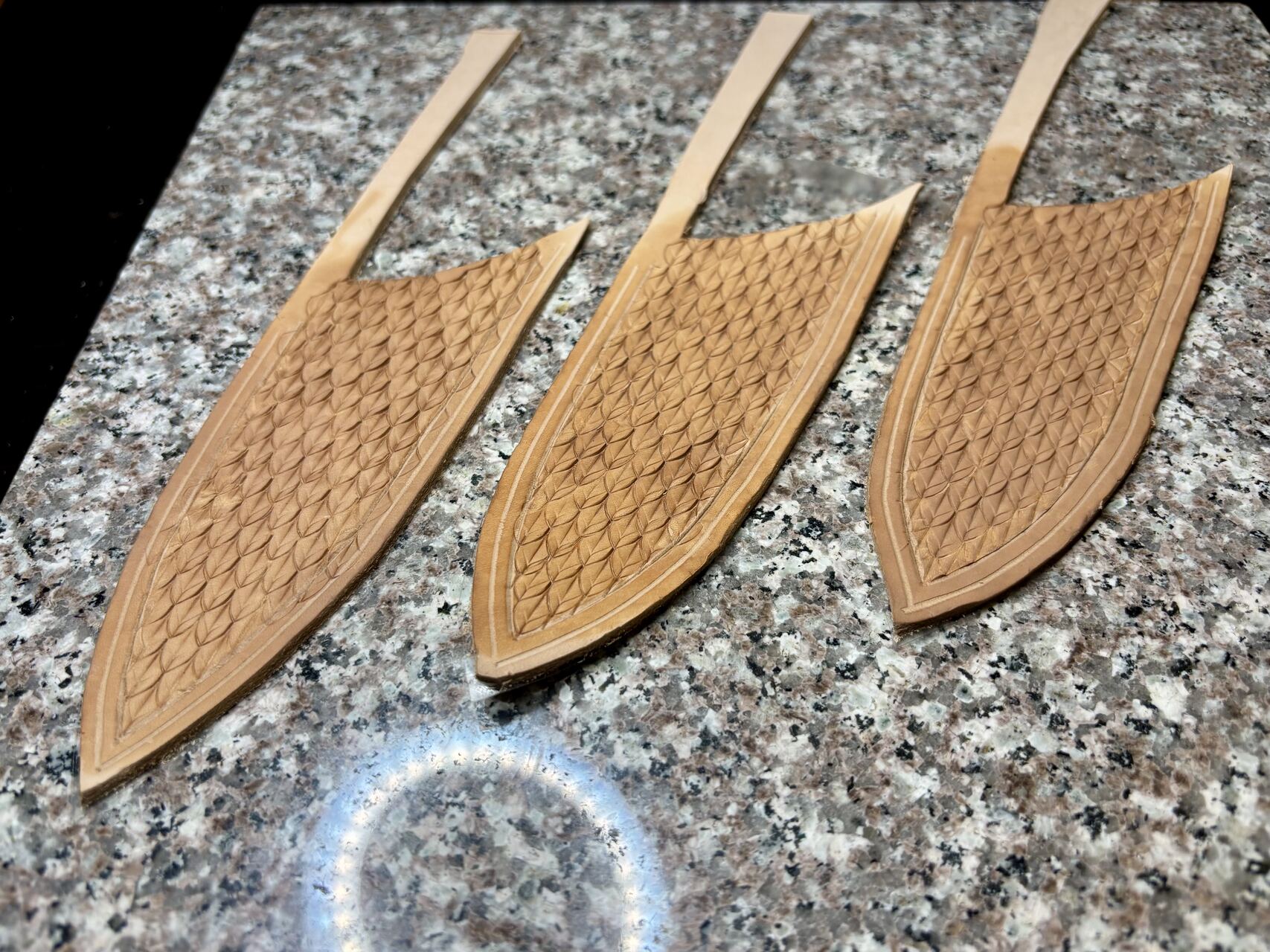
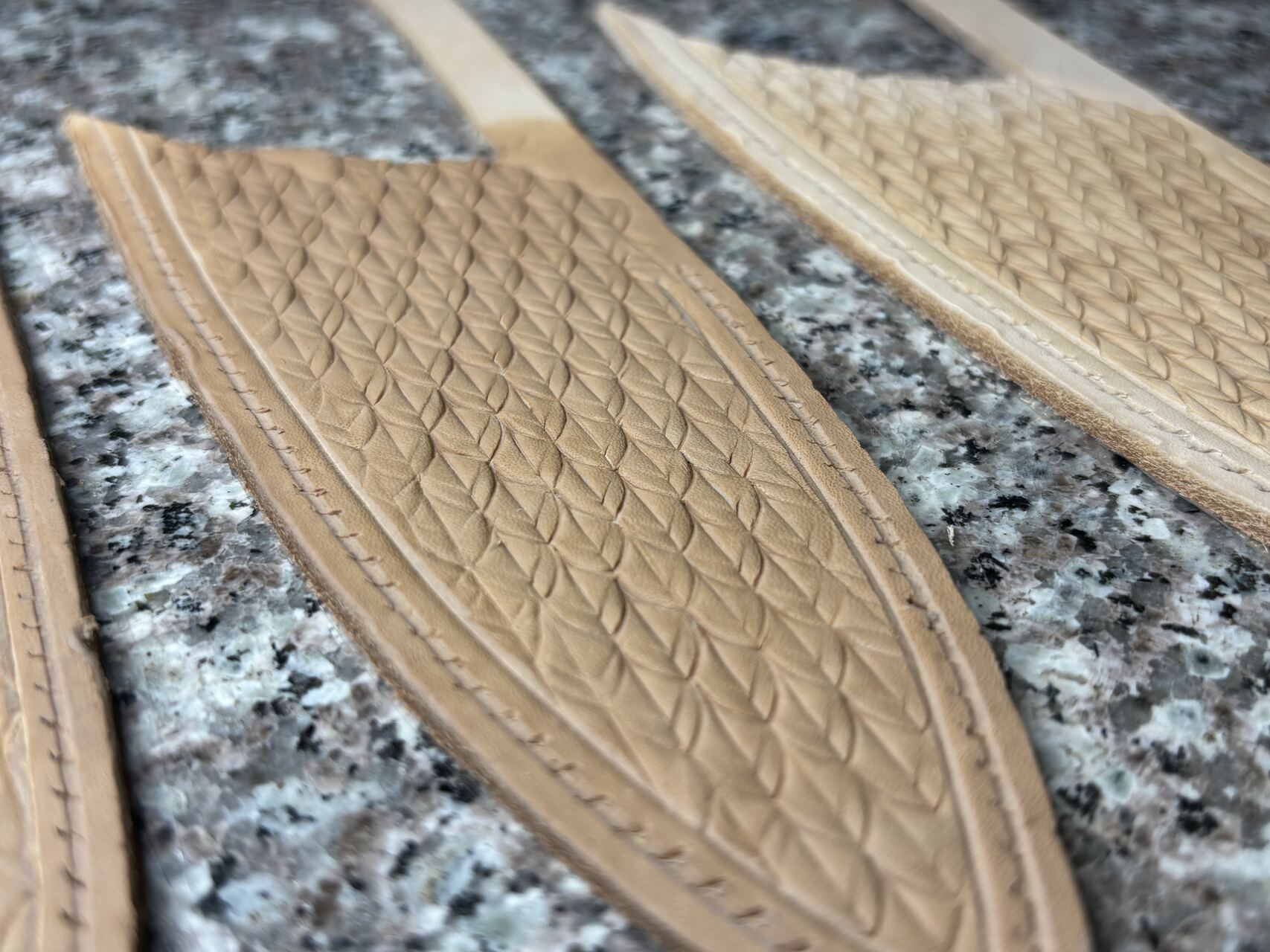
The look of the whole set: a dragon-scale stamp, a lot of layout, and a swivel knife for the edges where the stamp would cross the border.
Casing
"Casing" means getting the right amount of water into the veg-tan before you tool it. I wet the leather and let the moisture even out, then waited until the surface had gone back almost to its natural color but still felt cool and slightly damp. Then I tested the stamp on scrap. Too wet and the impressions go mushy; at the right moisture they come out crisp.
Dragon scale
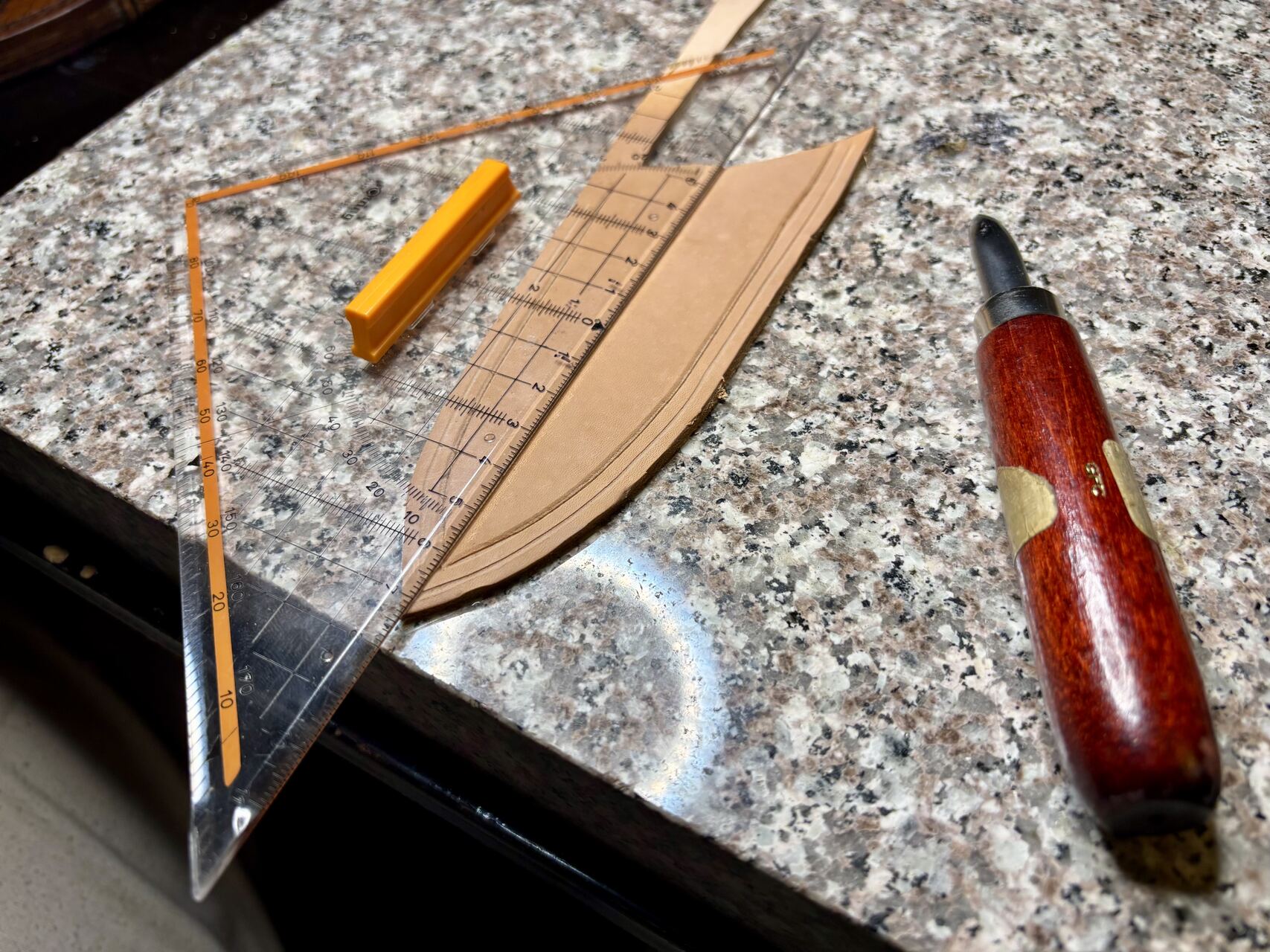
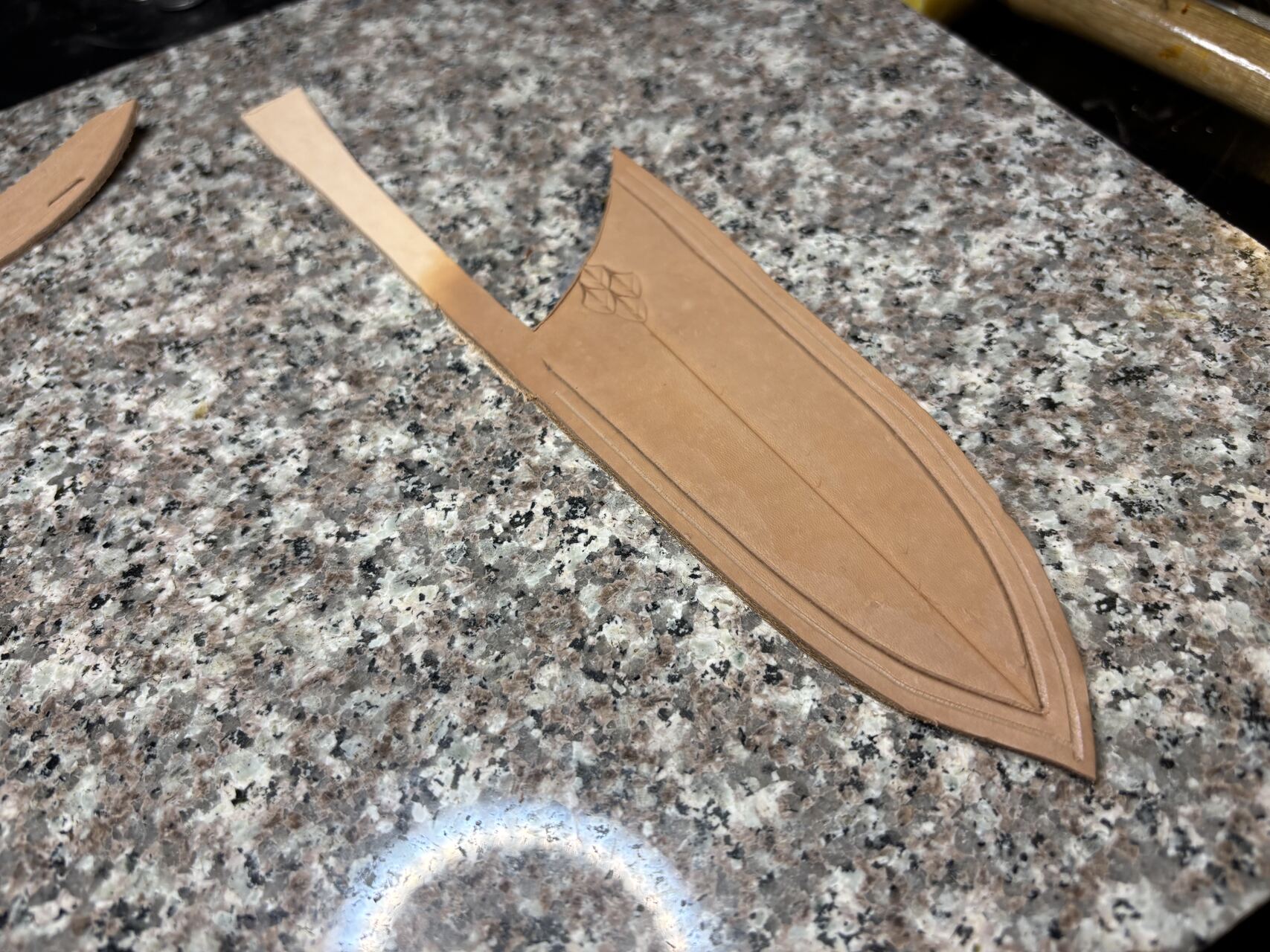
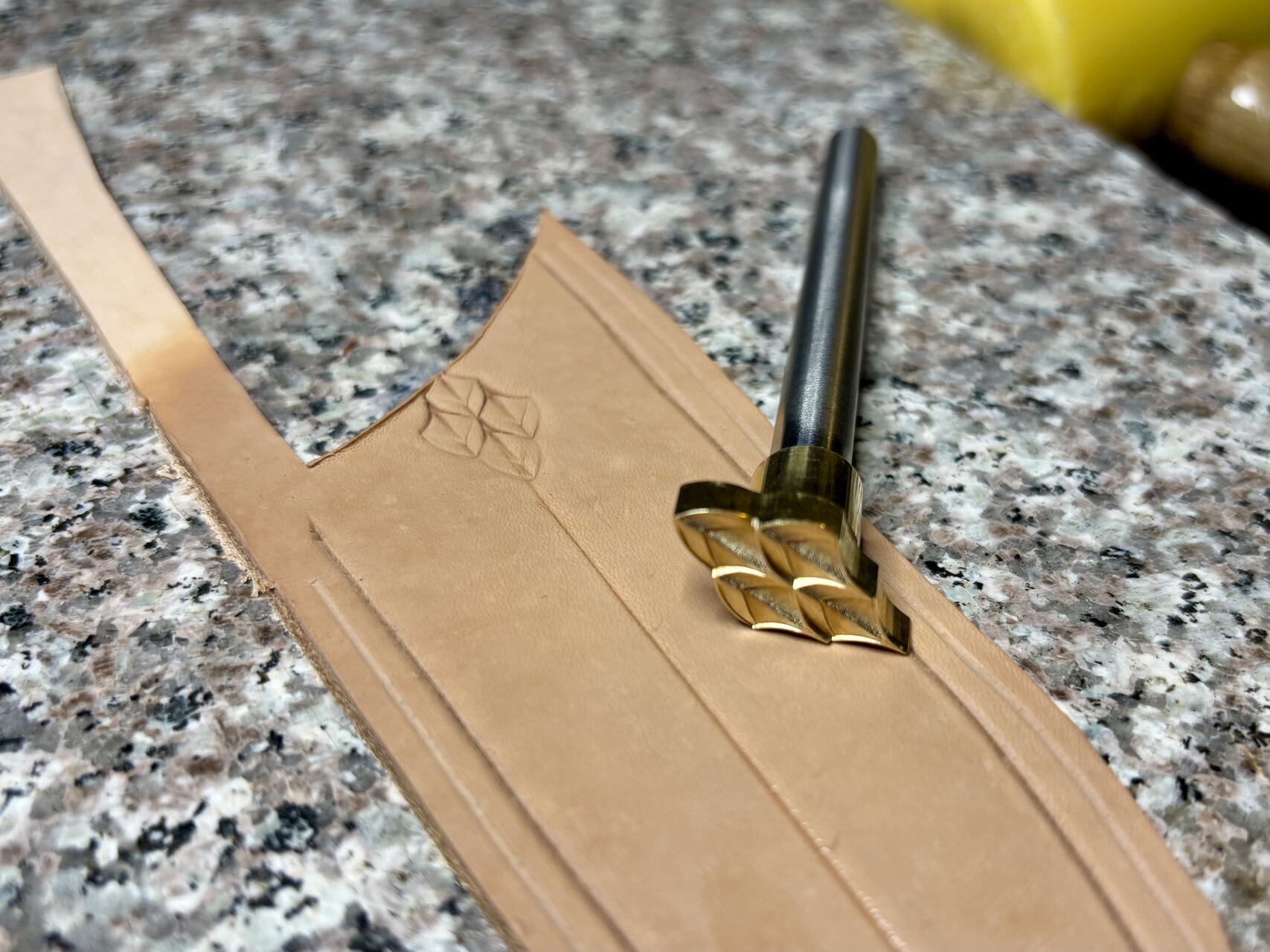
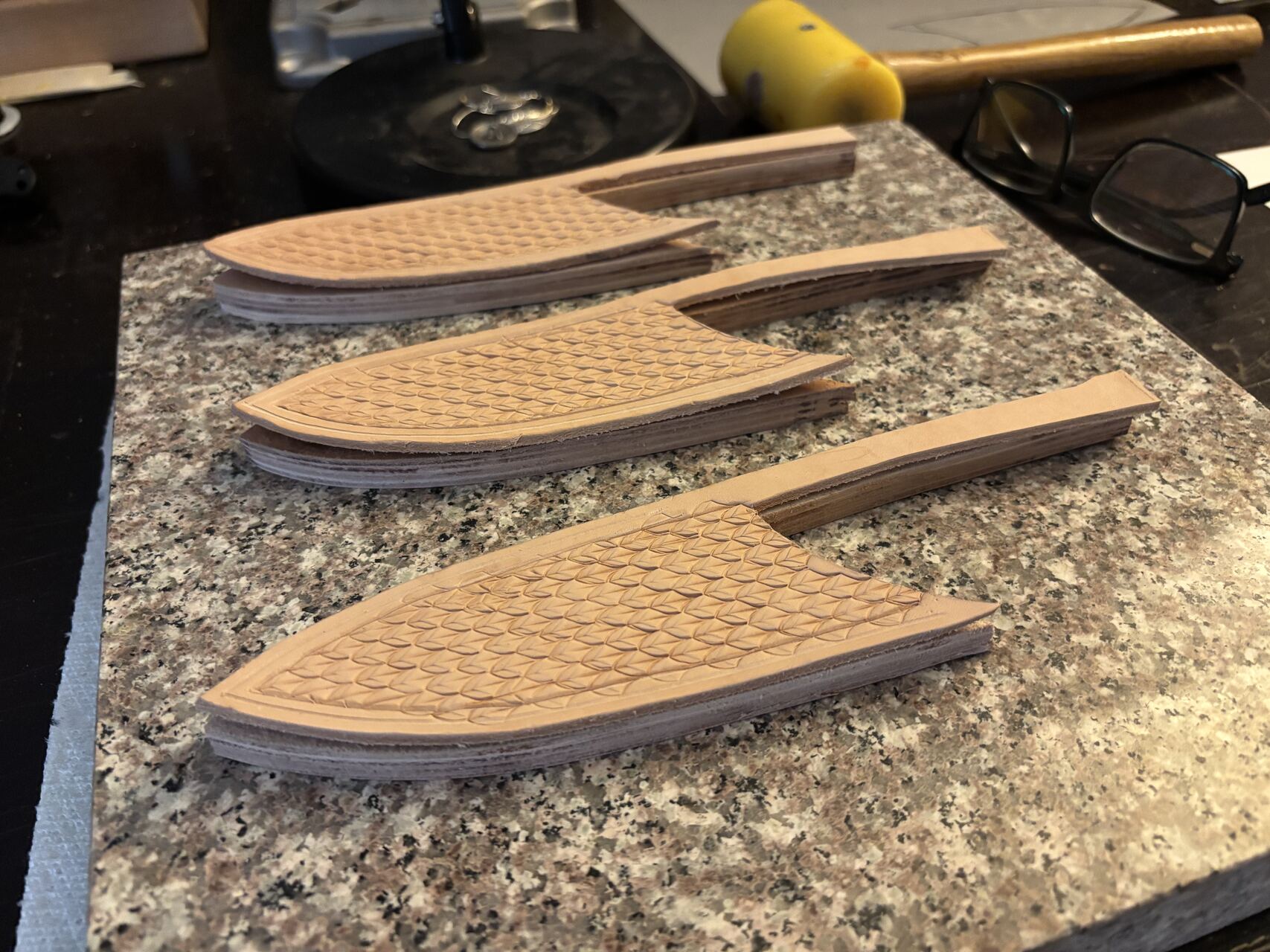
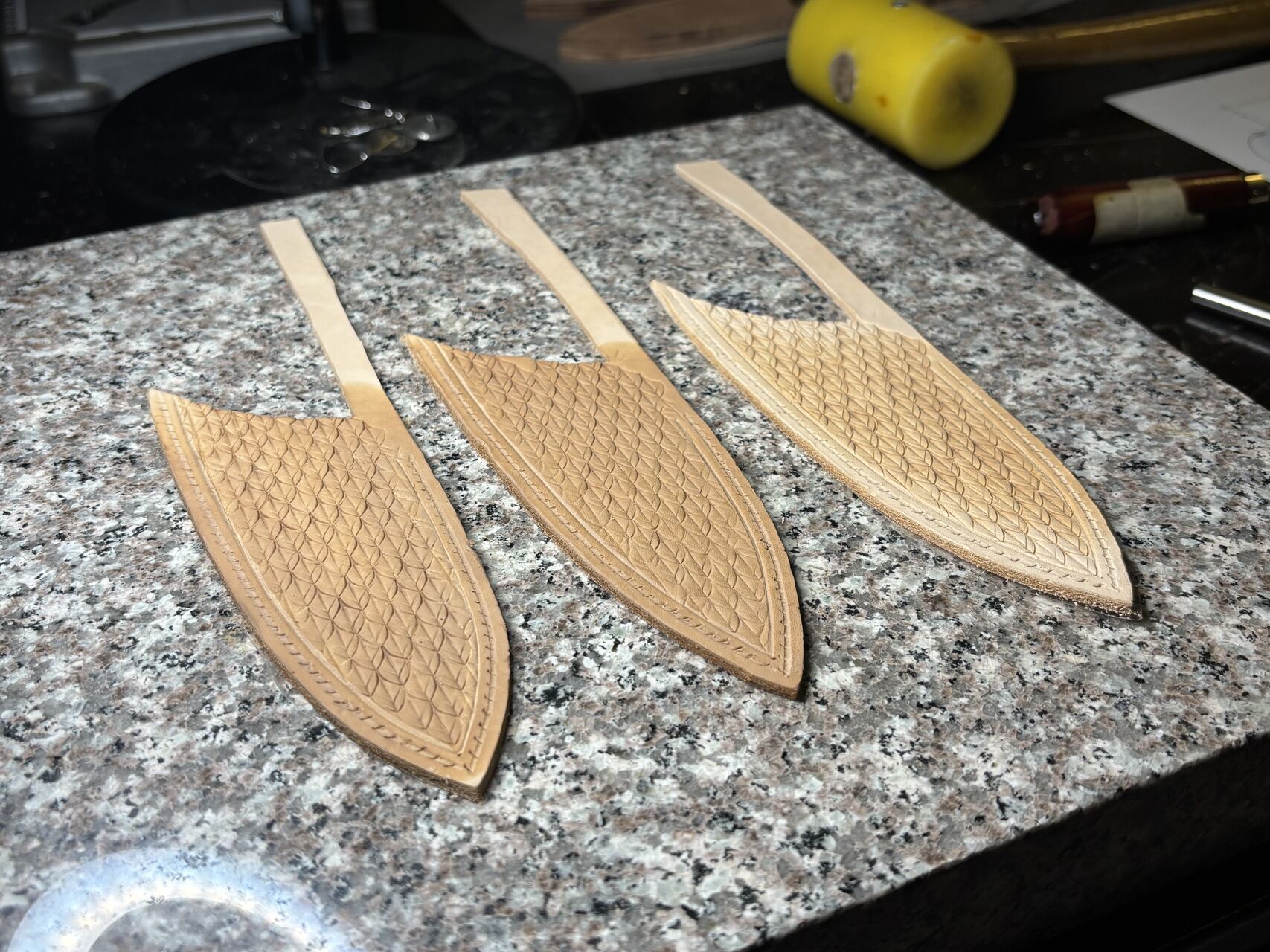
The pattern is dragon scale, from a single D&S #228-4 stamp. It's a repeating pattern, so the layout matters more than the striking. Lay out the border lines first, start each row from the same reference and keep the rows overlapping evenly.
⚠ The hard part: where the scales meet the border
A stamp can't stop halfway. Wherever a full impression would have crossed the border line, I hand-cut the scales instead with a swivel knife (photo 5). This matters a lot. It's the difference between a pattern that looks finished and one that looks chopped off.
Do the stamping first, then come back with the swivel knife and draw the partial scales by hand, following the curve of the stamped ones.
The wrapper is different
These are the flat front panels, and they're easy to tool. The outer wrapper is curved in three dimensions, so it gets a different process: form first, mark, flatten, tool, re-form. That's Step 7.
🛠 Tips
- Test the casing on a scrap from the same hide every session.
- Work inside the window. Cased leather gives you a limited amount of time, so work steady, at a good pace and with intention, and only start what you can finish before it dries. Practice is what teaches you how much that is.
- I don't re-wet unless a piece has dried out too fast.
- One well-placed strike per scale. I try never to strike the same spot twice: the second hit never lands exactly on the first, and that's how you lose the sharp lines.
- Strike with the same force every time, so every scale goes to the same depth.