
Sourcing the Wood
How the Arizona Rosewood came to be — sourcing a single tree and leaning on the mill's expertise for the cutting, drying, and flattening before the slabs ever reached the shop. (Choosing and arranging the boards comes later, in Step 3.)
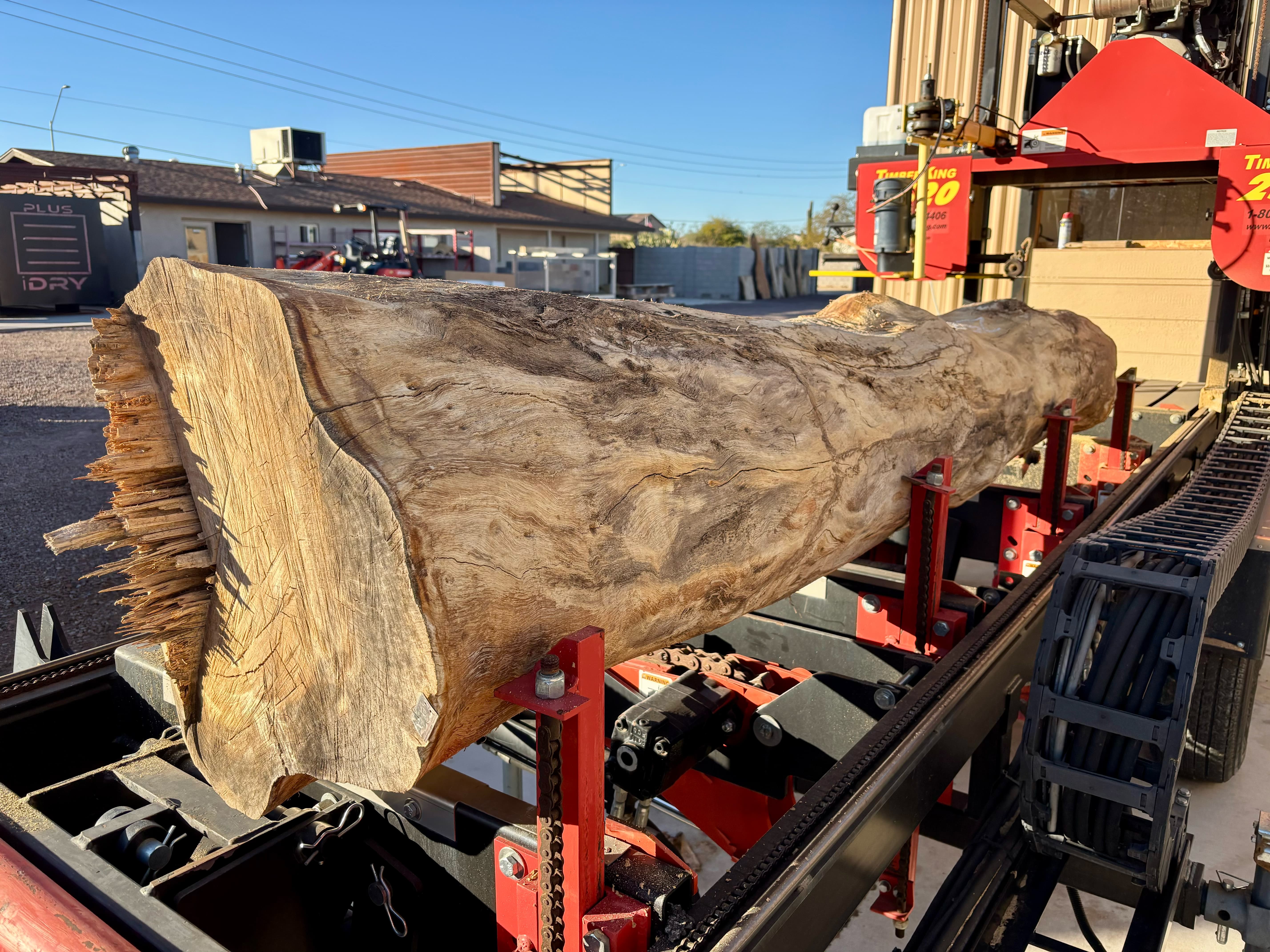
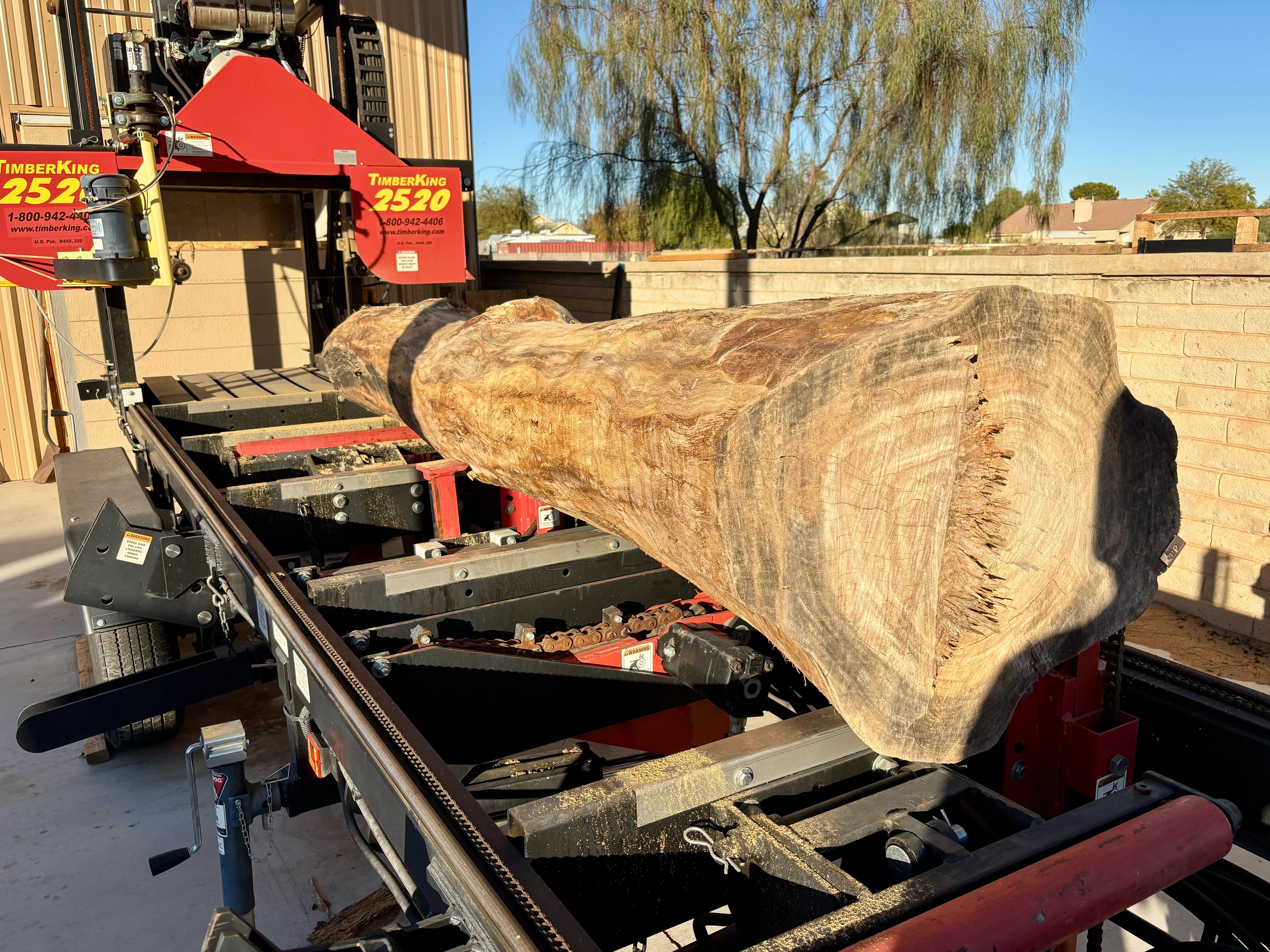
Choosing the species — with the mill's help
This project began as a walnut idea and became Arizona Rosewood after a long, detailed conversation with the owner of the mill. His experience is what steered the decision — the species, the specific source tree, and how the wood would behave once it was furniture. Working with a knowledgeable mill turned out to be the best move of the whole build: it got the project off on the right foot before a tool ever touched the wood.
Rosewood won on color, density, and how dramatically it responds to a natural oil finish. Rich, warm heartwood against pale sapwood — a contrast that pairs beautifully with black epoxy accents and matte-black steel.
Why Arizona Rosewood worked here
- Dense, hard, and well suited to an heirloom dining surface.
- Strong natural color and figure that pops under a Rubio Monocoat oil finish.
- A distinct sapwood/heartwood contrast to design around.
- Locally sourced from a single tree — which just felt right for a piece meant to last.
Cutting the tree — and celebrating the grain
The boards all came from one tree, cut to slabs at the mill. The best part of the day: after each cut, we hosed the fresh face down with water. Wetting the wood makes the grain leap out exactly the way an oil finish eventually will — so every cut became a live preview of the figure hiding inside a rough slab. It turns sourcing into a celebration. If you ever get the chance to be there for the cutting, take it.
Drying and flattening — handled at the mill
Before delivery, the mill kiln-dried the slabs and CNC-flattened them — two steps that are hard or impossible in a typical home shop. Kiln drying brings the wood down to a stable interior moisture level (and kills any bugs or pests living in it); CNC flattening establishes dead-flat, parallel faces on slabs far too wide for most home-shop machines. Having both done at the mill meant the boards arrived stable and true, ready for furniture work. (More on why this matters in Step 2.)
Moisture: the one rule you can't skip
Building from wet wood is the fastest way to ruin a table — it will move, cup, and pull joints apart for months as it dries. This rosewood was professionally kiln-dried, but the rule stands no matter where your wood comes from: confirm it's dry and stable, and let it acclimate to your shop before you start.
🛠 Tips
- Talk to your mill — a good sawyer's read on species and source tree beats any spec sheet.
- Source from a single tree when you can; the grain and color will relate across every board.
- Hose down a fresh cut to preview the grain the way the finish will show it.
- Let the mill kiln-dry and flatten wide slabs if you can — it's hard to match at home.