
C-Channel Routing & Installation
Adding steel C-channels under the slab to resist warping on a wide top — routed in, slotted for seasonal wood movement, and installed after the underside is finished.
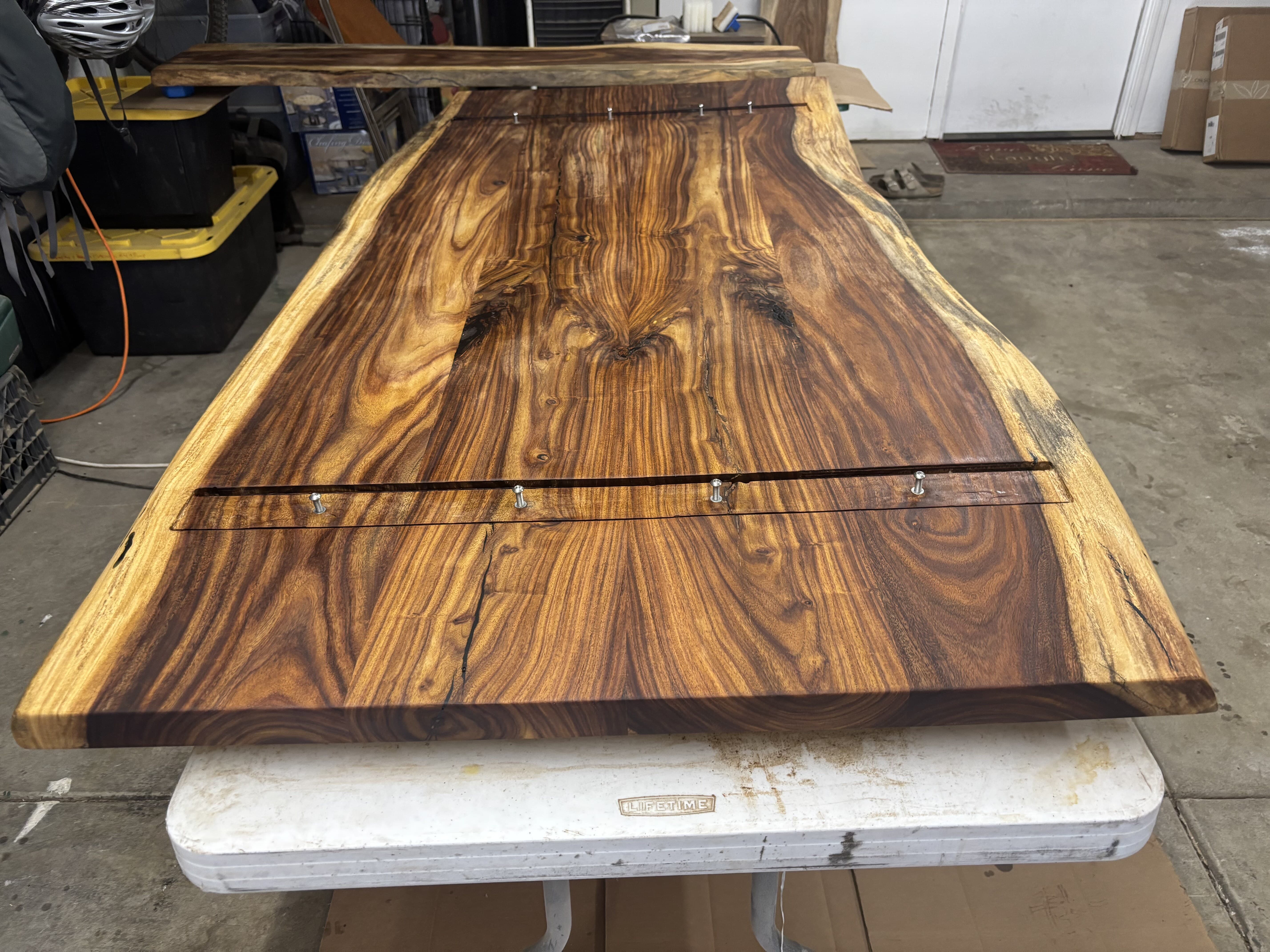
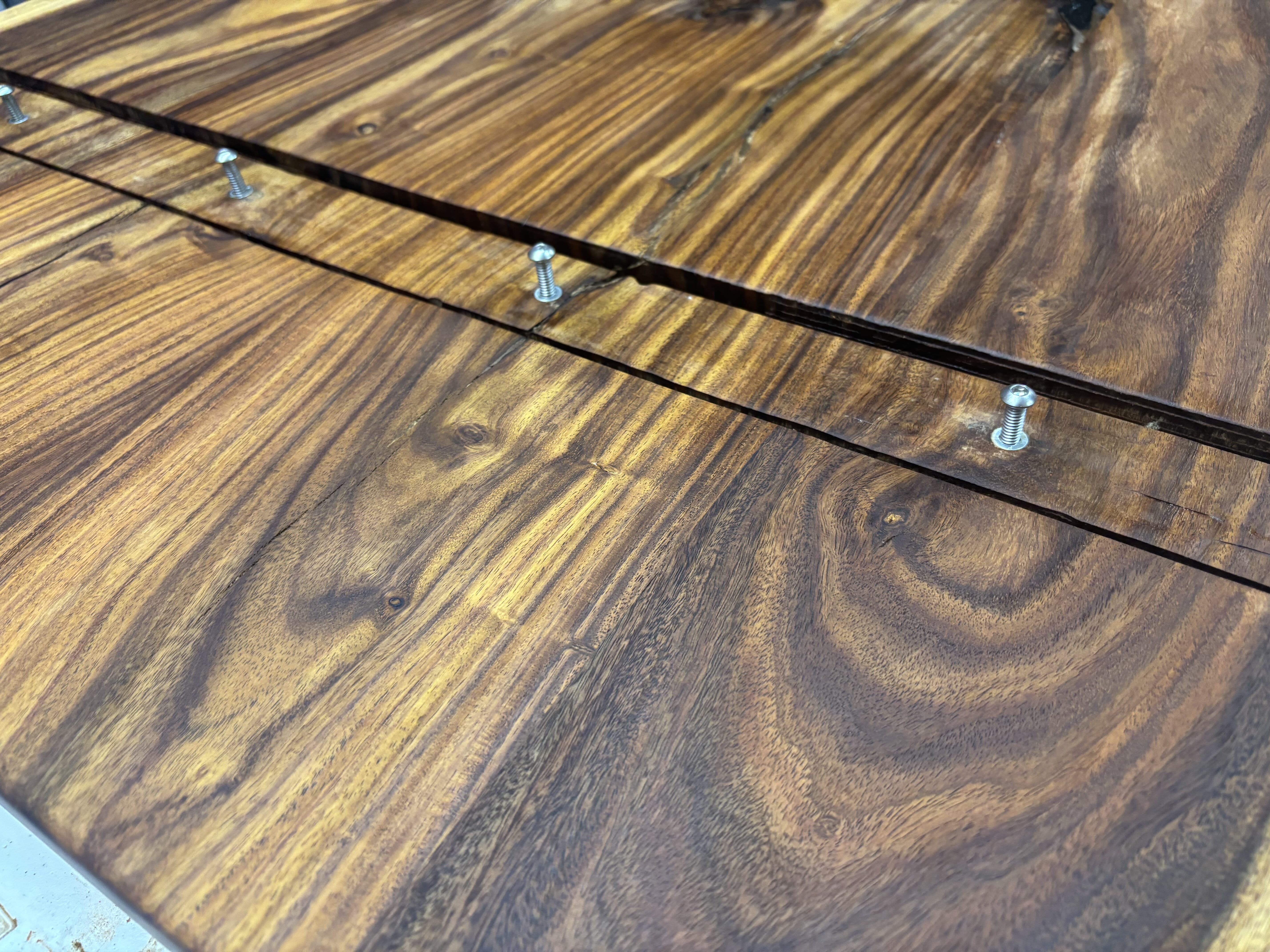
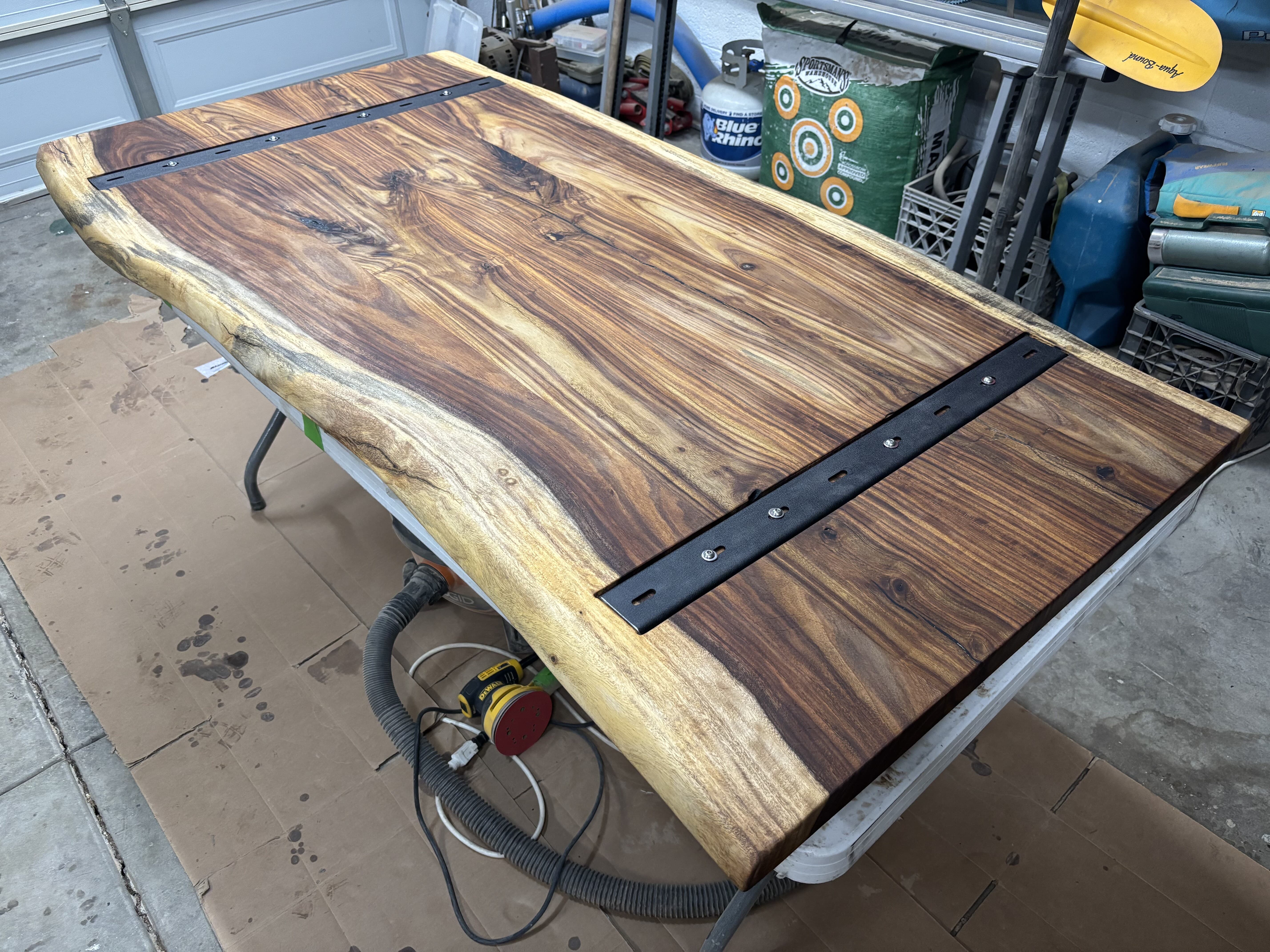
Why use C-channels
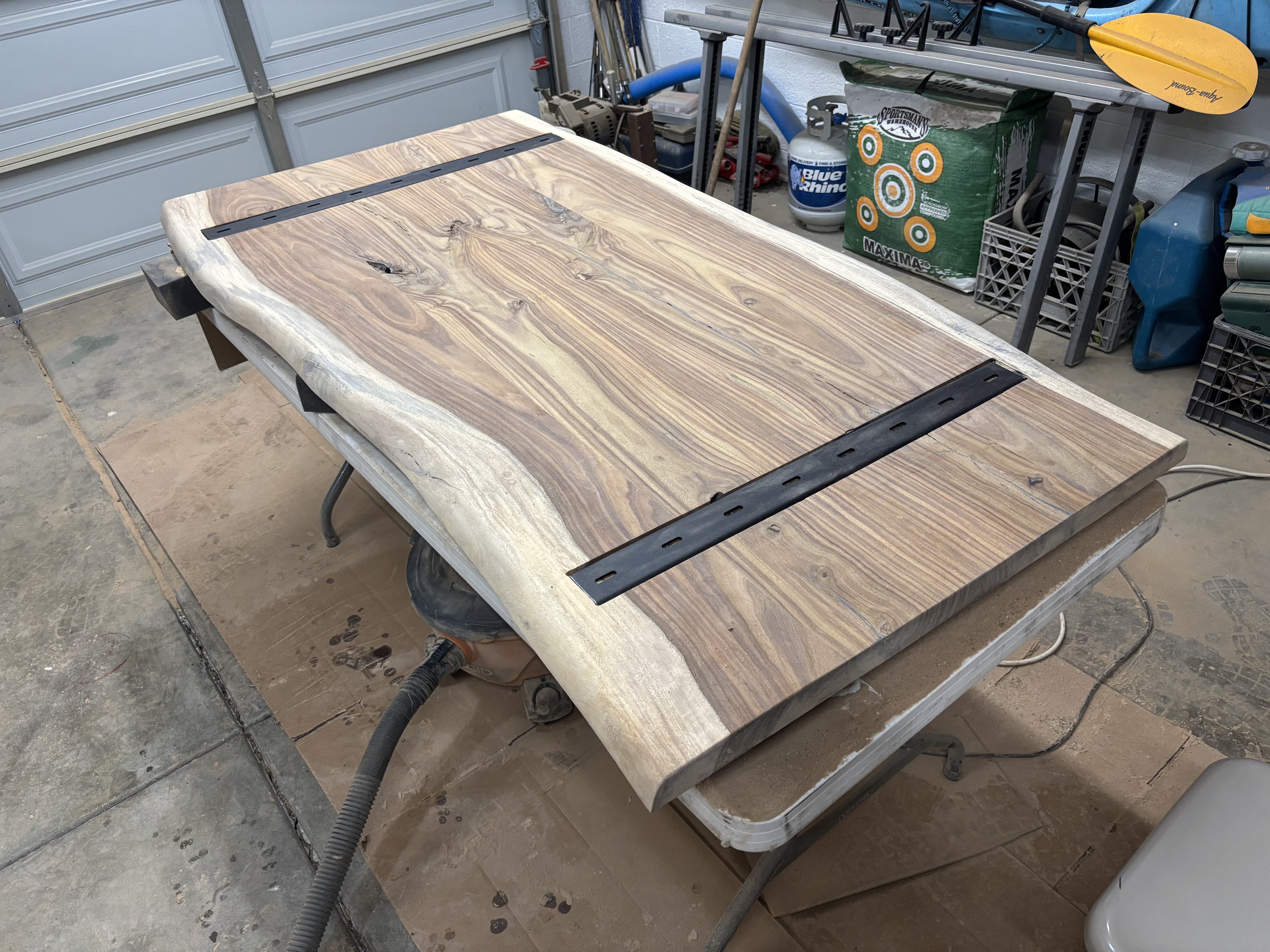
A wide slab wants to cup and warp over time. Steel C-channels let into the underside act as stiffeners that keep it flat — useful insurance on a 34–38" wide rosewood top.
Placement planning
Lay out the channels across the width (perpendicular to the board joints), spaced to span the top without interfering with where the metal legs will mount. Plan placement before routing anything. One detail worth getting right: don't line up a slotted screw hole right over a glue joint between boards — keep every fastener biting into solid wood, not sitting on a seam.
Routing the channels
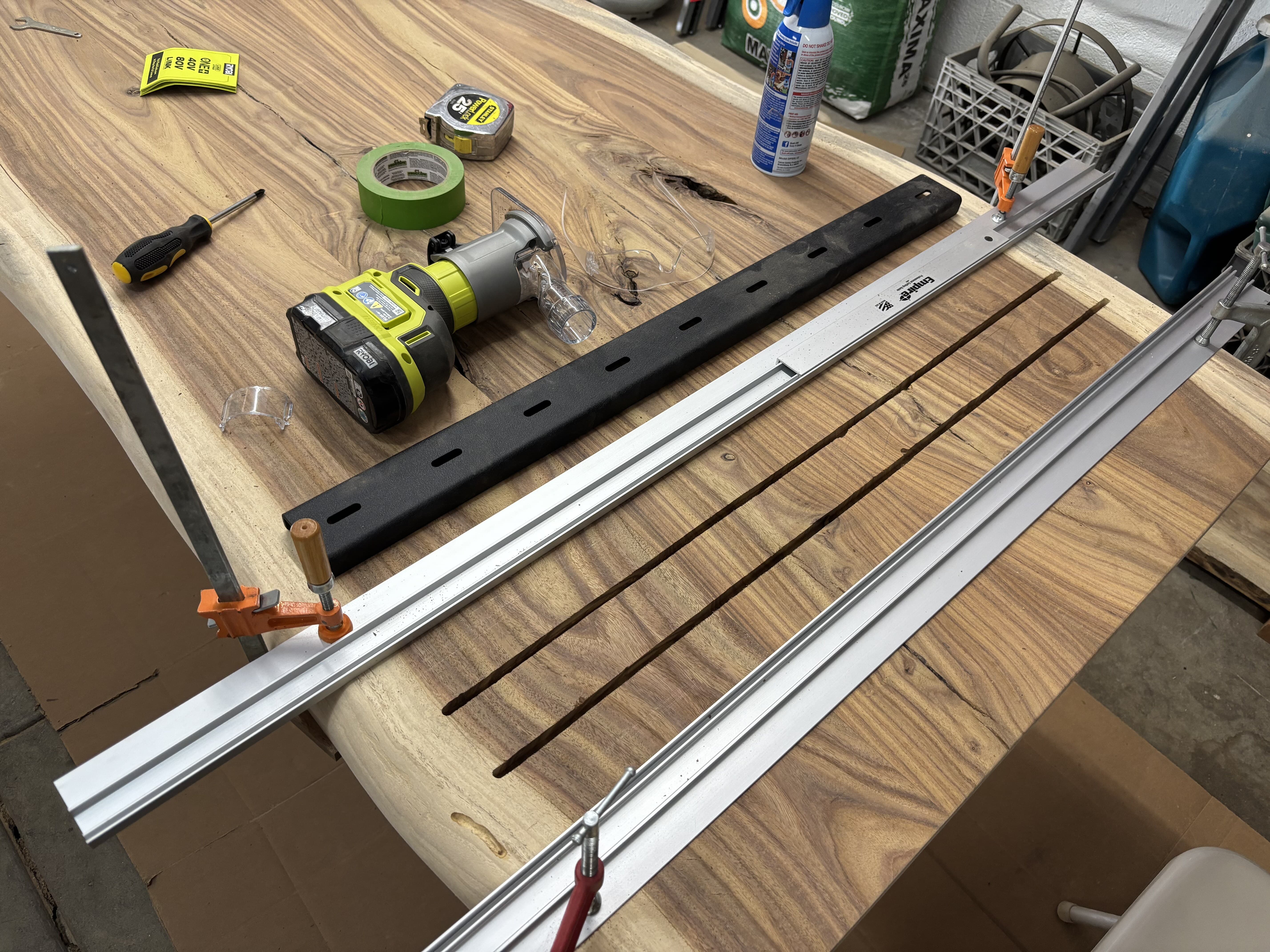
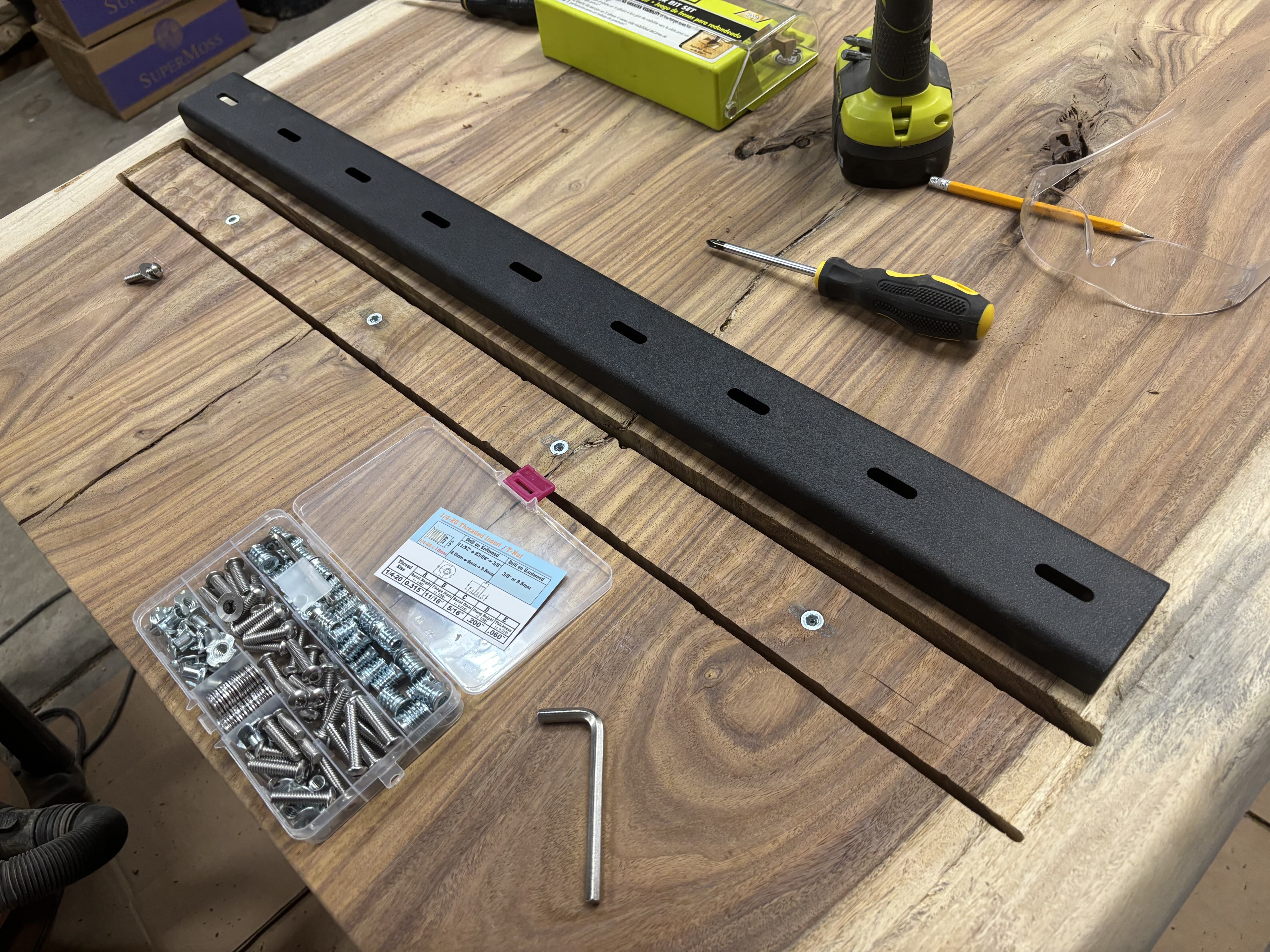
Full honesty on method: I didn't use a router table or a purpose-built jig. I clamped my Empire cutting guides, spaced to the channel width, and used them as router fences — then took each dado down in very light passes. My router wasn't powerful, so this was slow, slow, slow: patience and precision instead of power. That turned out fine. Whatever you use, don't try to hog it out in one deep pass — creep down to final depth and test-fit the channel as you approach it. A snug channel that still drops in by hand is the target.
Slotting for wood movement
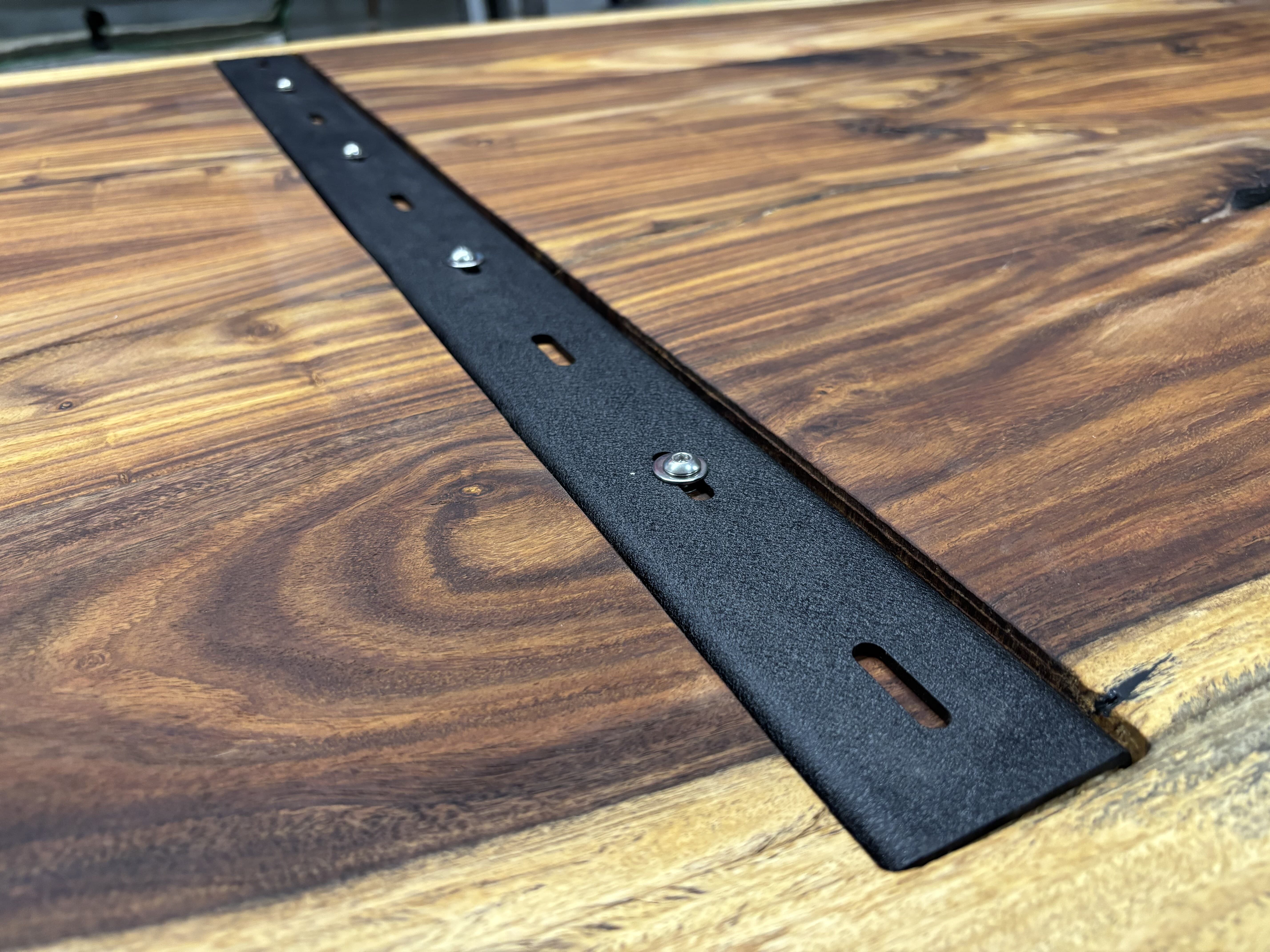
This is the part people get wrong. The slab must still be able to expand and contract across its width. Use elongated/oversized screw holes (slots) so the wood can move under the fixed steel. Center screws snug; outer screws ride in slots.
Finishing the cavities & install order
Sand the underside before installing channels. Rubio can be applied in the routed wood cavities, but not on the metal itself. Finish the underside first, then install the channels. These channels came from Bidwell Wood & Iron and arrived already powder-coated, so no clear coat was needed; an optional clear coat only applies to raw steel for rust prevention.
⚠ Key rule — Don't lock the slab solid
Screwing every hole tight pins the wood and guarantees a crack as it moves seasonally.
Fix: fix the channel at the center and let the outer screws float in slotted holes. The steel keeps it flat; the slots let it breathe.
🛠 Tips
- Don't lock the slab so tightly it can't move.
- Route carefully in passes and test-fit.
- Seal routed wood areas with Rubio — but keep it off the powder-coated steel.
- Sand the underside before installing channels.